

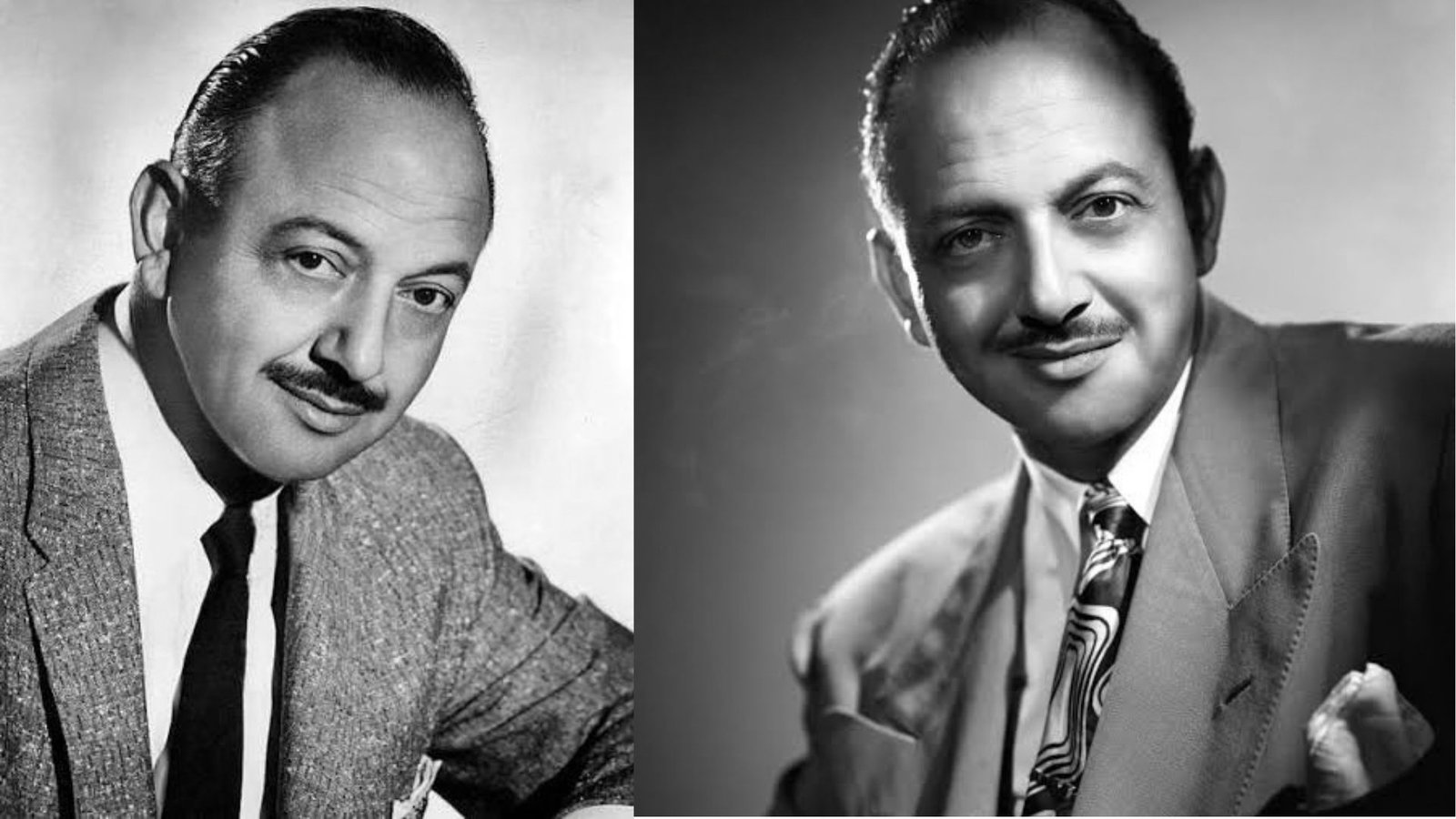
When people search for Mel Blanc net worth, they often expect one clean number. That is harder to provide than it sounds. Blanc died in 1989, long before celebrity wealth websites routinely tracked estates, contracts, residuals, and licensing income. As a result, several figures now circulate online, but they do not all describe the same thing.
One frequently cited estimate puts his wealth at $25 million in inflation-adjusted terms, while other modern websites publish substantially different figures. None of these numbers should be treated as an independently verified estate accounting.
What can be established with much greater confidence is the story behind the money. Blanc spent more than six decades working in radio, animation, television, advertising, and film. He became the defining voice behind Bugs Bunny, Daffy Duck, Porky Pig, Tweety, Sylvester, Yosemite Sam, Foghorn Leghorn, and numerous other characters.
So, rather than treating one internet estimate as fact, this article looks at what is known about Mel Blanc net worth, how he earned his money, why his early contracts were surprisingly modest, and why his career changed the economics and recognition of voice acting.
What Was Mel Blanc’s Net Worth?
The most widely repeated online estimate is $25 million, with Celebrity Net Worth describing that figure as an inflation-adjusted value at the time of Blanc’s death in 1989.
There is an important qualification, however:
there is no publicly verified financial record establishing that $25 million was the exact value of Blanc’s estate when he died.
That distinction matters because celebrity-net-worth figures are often retrospective estimates rather than audited estate valuations. In Blanc’s case, publicly available biographical sources provide extensive information about his career but do not establish a definitive balance sheet for his final assets.
A more responsible way to describe the situation is:
- Widely published estimate: $25 million, inflation-adjusted, according to Celebrity Net Worth.
- Verified estate figure: Not publicly established in the major biographical sources reviewed.
- Career wealth: Built through decades of radio, animation, television, commercials, and other entertainment work.
- Character ownership: Blanc did not simply own the major Looney Tunes characters he voiced; the economics of his career were largely based on his performance work rather than owning Bugs Bunny or Daffy Duck outright.
That last point is one of the most interesting parts of his financial story.
How Mel Blanc Built His Wealth
Blanc’s income did not come from a single cartoon series. His career developed across several entertainment industries.
Radio Was the Foundation
Before becoming synonymous with animation, Blanc established himself as a highly versatile radio performer.
He worked on programs including The Jack Benny Program, The Abbott and Costello Show, The George Burns and Gracie Allen Show, Fibber McGee and Molly, and other popular broadcasts. On the Jack Benny program alone, he performed a remarkable collection of recurring characters and sound effects.
This is an important detail when considering Mel Blanc net worth. His financial career was already developing before Bugs Bunny became an international icon.
Voice acting also suited radio particularly well because one performer could provide several voices within the same production. Blanc’s ability to move rapidly between personalities made him unusually valuable.
Warner Bros. Made Him Famous
Blanc joined Leon Schlesinger’s animation operation in 1937, where he began providing voices for Warner Bros. theatrical cartoons. Porky Pig and Daffy Duck were among his early major roles, followed by the character that would become his signature: Bugs Bunny.
Over the following decades, Blanc became associated with a huge portion of the Looney Tunes and Merrie Melodies cast.
His credits included:
- Bugs Bunny
- Daffy Duck
- Porky Pig
- Tweety
- Sylvester
- Yosemite Sam
- Foghorn Leghorn
- Wile E. Coyote
- Road Runner
- Speedy Gonzales
- Marvin the Martian
- Pepé Le Pew
He also supplied voices outside Warner Bros., including Barney Rubble and Dino for The Flintstones and Cosmo Spacely for The Jetsons.
The sheer volume of work helps explain how a performer who was rarely seen on screen could build a long and financially successful Hollywood career.
Why His Early Cartoon Salary Was Surprisingly Modest
One of the most revealing details about Mel Blanc net worth is that his fame did not immediately translate into enormous cartoon salaries.
Encyclopedia.com reports that Blanc did not own the rights to the characters and that his annual Warner Bros. earnings did not exceed $20,000 during the period discussed in its biography.
A contemporary UPI obituary similarly reported that Blanc had said he never made more than $20,000 a year from cartoon work during his busiest years.
For a performer responsible for some of the most recognizable characters in American entertainment, that sounds surprising today.
The reason is partly historical. The modern idea of voice actors receiving substantial merchandising participation, franchise royalties, and extensive residual structures cannot simply be projected backward onto the 1930s and 1940s.
Blanc was enormously valuable creatively, but the studio system controlled the properties.
His Screen Credit Fight Was More Important Than It Looks
Blanc also understood that professional recognition had financial value.
According to biographical accounts, he negotiated for screen credit for his voice work after Warner Bros. declined a requested salary increase. By the mid-1940s, his contracts specified voice-characterization credit, and the arrangement was later expanded.
That may sound like a minor Hollywood detail, but it was significant.
Voice performers were often effectively invisible. Blanc’s credit helped establish a stronger connection between a famous character and the performer who created its voice.
Unique insight:
Blanc’s influence was therefore not limited to how he performed. He also helped establish the professional visibility of voice actors at a time when the studio system could easily treat them as anonymous production workers.
The 1960 Contract Change Expanded His Opportunities
Blanc’s exclusive Warner Bros. contract ended in 1960, opening the door to work with other animation companies.
That transition was financially significant because it diversified his career.
Instead of depending primarily on one studio, Blanc could work across television, commercials, other animation producers, and different entertainment formats.
His post-1960 career included major television work such as The Flintstones, along with advertising and later film projects. He also voiced characters in Buck Rogers in the 25th Century and appeared in the voice cast of Who Framed Roger Rabbit in 1988.
This diversification provides a useful explanation for why his eventual wealth cannot be calculated simply by multiplying a cartoon salary by the number of characters he voiced.
Did Mel Blanc Own Bugs Bunny?
No. Blanc created the voice performance associated with Bugs Bunny, but that does not mean he personally owned the Bugs Bunny character as intellectual property.
This distinction is essential when discussing Mel Blanc net worth.
Blanc’s contribution was extraordinary, but the Looney Tunes characters were studio-owned properties. Contemporary biographical material specifically notes that Blanc did not own the rights to the characters he voiced.
Think of it this way:
Character ownership and performance ownership are different economic concepts.
A performer can create an unforgettable interpretation without owning the underlying fictional property. That was particularly important in Hollywood’s studio era.
It also explains why assumptions about Blanc receiving a huge percentage of every Bugs Bunny product sale should be treated cautiously.
A Remarkable Career Beyond Looney Tunes
Blanc’s income and professional value were not limited to Bugs Bunny.
He worked in radio, television, commercials, theatrical cartoons, and feature films. He also created or performed distinctive voices outside the Warner Bros. universe.
His work included:
- Barney Rubble and Dino in The Flintstones
- Cosmo Spacely in The Jetsons
- Woody Woodpecker’s original laugh and voice work in early Walter Lantz cartoons
- Twiki in Buck Rogers in the 25th Century
- Multiple Looney Tunes characters in Who Framed Roger Rabbit
That breadth is another reason simple “salary × years” calculations fail.
Blanc was effectively operating as a specialized entertainment performer whose voice could be used across multiple formats.
The 1961 Accident Revealed How Valuable His Voice Was
One of the most extraordinary episodes of Blanc’s life occurred in 1961.
After a serious automobile accident, he suffered severe injuries and spent weeks in a coma. According to accounts from Blanc and his family, a doctor eventually tried addressing him through his cartoon characters rather than speaking to him normally. Blanc responded in the voice of Bugs Bunny.
The story became part of Blanc’s public legacy, although some details come from his own recollections and family accounts rather than an independently documented medical case.
What is less often discussed is the professional consequence: Blanc’s work continued during his recovery. The Los Angeles Times reported that he recorded material from home, with a microphone suspended over his bed.
Unique insight:
This episode demonstrates something unusual about voice acting. Blanc’s physical absence from a studio did not necessarily make his professional identity unusable. His most valuable asset was a highly recognizable vocal performance that could be recorded remotely.
That concept has become routine in modern voice production, but Blanc was demonstrating its practical value decades ago.
Why Mel Blanc’s Legacy Is Worth More Than a Number
A search for Mel Blanc net worth can easily become a search for a single dollar figure. His career tells a more useful story.
Blanc helped establish voice acting as a recognizable professional craft. He was awarded a star on the Hollywood Walk of Fame in the radio category in 1960.
He also worked continuously across changing entertainment technologies.
He began in radio, moved into theatrical animation, adapted to television, worked in advertising, and continued into feature-film animation. That ability to move between formats helped make his career unusually durable.
His professional longevity is particularly striking because animation itself changed dramatically during his lifetime.
Unique insight:
Blanc’s real financial advantage was not simply that he had famous characters. It was that he repeatedly transferred the same core skill—voice characterization—into new entertainment markets as the industry changed.
That is a more useful explanation of his financial success than the idea that Bugs Bunny alone made him wealthy.
READ ALSO :Diana Ross: Age, Children, Career, and Net Worth
Common Mistakes When Estimating Mel Blanc’s Wealth
Several common assumptions can produce misleading answers.
Mistake 1: Treating $25 Million as an Audited Figure
The $25 million figure is widely published, but it is an estimate presented in inflation-adjusted terms, not a publicly documented estate statement.
Mistake 2: Assuming He Owned the Characters
Blanc was the defining voice behind numerous characters, but character ownership belonged to the relevant studios rather than automatically belonging to the performer.
Mistake 3: Ignoring Radio
Someone researching only Looney Tunes misses a major part of Blanc’s professional career. His radio work was extensive and continued for years.
Mistake 4: Comparing 1940s Pay With Modern Voice-Actor Economics
Entertainment contracts, residuals, licensing arrangements, inflation, and the value of intellectual property have changed substantially. A historical salary cannot be compared directly with a modern celebrity’s reported annual income.
Mel Blanc’s Age, Family and Death
Melvin Jerome Blank was born on May 30, 1908, in San Francisco, California. He later became known professionally as Mel Blanc and was widely nicknamed “The Man of 1,000 Voices.”
He was married to Estelle Blanc and had a son, Noel Blanc, who also worked as a voice performer and helped carry on some of his father’s character work.
Blanc died on July 10, 1989, at age 81. Contemporary reports said he had been hospitalized with serious heart-related medical problems.
His grave at Hollywood Forever Cemetery famously carries the words “That’s All Folks!”, connecting his final resting place with one of the most recognizable phrases associated with his career.
Frequently Asked Questions
What was Mel Blanc’s net worth when he died?
There is no publicly verified estate figure that establishes an exact amount. Celebrity Net Worth currently gives an inflation-adjusted estimate of $25 million, but that should be treated as an estimate rather than an audited estate valuation.
How did Mel Blanc make his money?
Blanc earned income through radio, animation, television, commercials, and film work over a career spanning more than six decades. His best-known work came from voicing Looney Tunes characters, but radio and later television work were also important parts of his career.
Did Mel Blanc own Bugs Bunny?
No. Blanc created and performed the iconic voice, but he did not own the underlying Bugs Bunny character. Historical biographical sources note that he did not own the rights to the characters he voiced.
How many characters did Mel Blanc voice?
The exact number depends on how individual voices and characters are counted. IMDb describes Blanc as having developed and performed nearly 400 distinct character voices, while his nickname “The Man of 1,000 Voices” became part of his public identity.
What happened to Mel Blanc after his 1961 accident?
Blanc suffered serious injuries and spent weeks in a coma following a car accident. After his recovery began, he was able to continue recording some work from home, demonstrating how essential his voice was to ongoing productions.
Conclusion
The most responsible answer to Mel Blanc net worth is not simply a dollar figure. A widely circulated estimate places his inflation-adjusted wealth at $25 million, but the exact value of his estate has not been publicly established through a definitive financial accounting.
What is certain is that Blanc built an extraordinary career by turning vocal performance into a highly specialized form of entertainment. He moved from radio to theatrical cartoons, television, advertising, and film while helping make characters such as Bugs Bunny, Daffy Duck, Porky Pig, Tweety, and Sylvester permanently recognizable.
His financial story also reveals an important piece of Hollywood history: being the voice behind a famous character did not necessarily mean owning that character or receiving modern-style franchise wealth.
That may be the most useful way to understand Blanc’s fortune. The number is uncertain, but the professional legacy behind it is remarkably well documented.
