

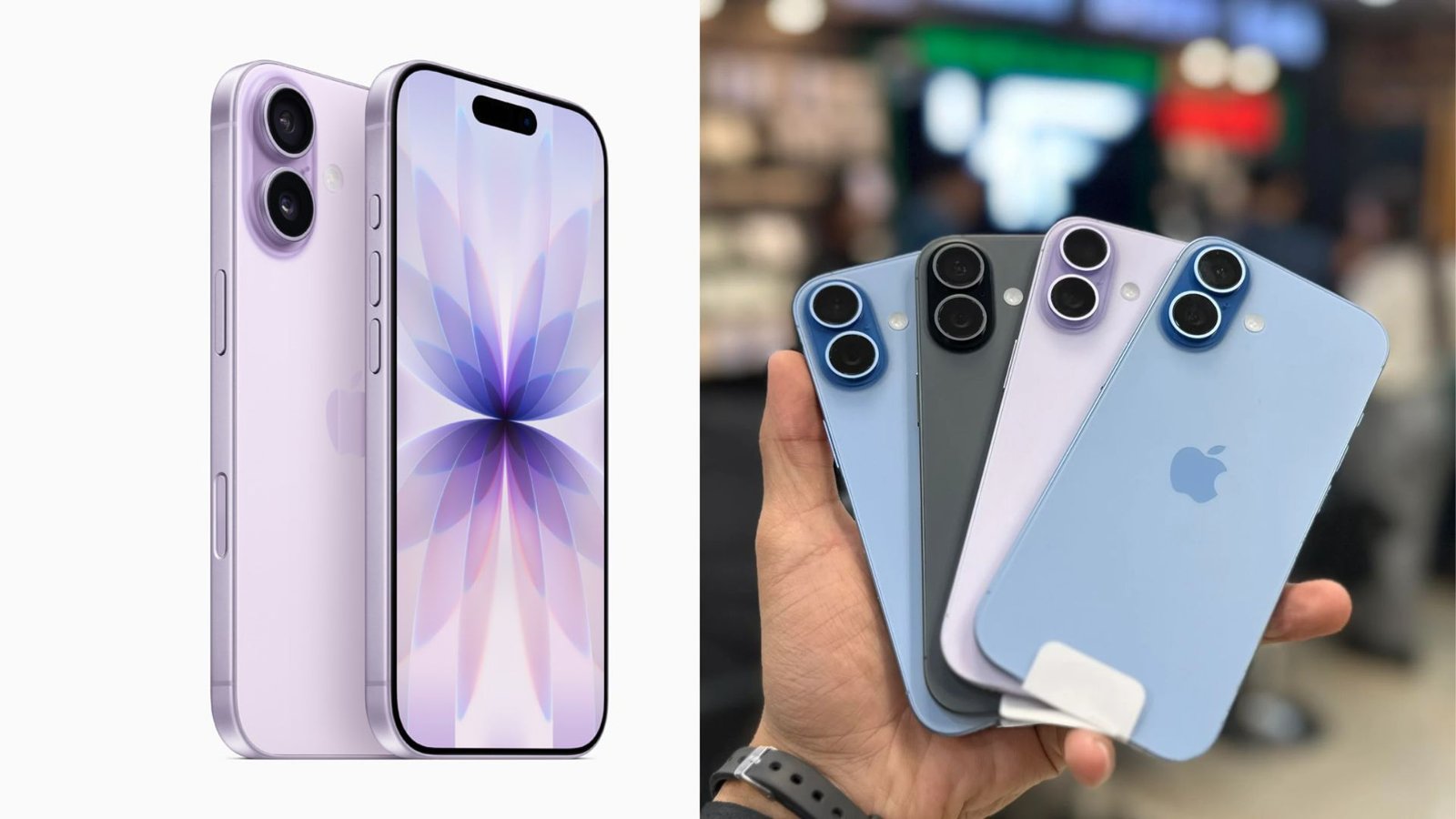
The iPhone 17 brings several meaningful upgrades to Apple’s standard iPhone line, including a 6.3-inch OLED display with ProMotion up to 120Hz, the A19 chip, a 48MP Dual Fusion camera system, and an 18MP Center Stage front camera. It also starts with 256GB of storage, giving buyers more space than the previous generation.
For shoppers in the USA and UK, the main questions are straightforward: what has changed, how good are the cameras, how long does the battery last, and is the standard model enough for everyday use? Here is a detailed look at the hardware and features that matter most.
iPhone 17 at a Glance
Apple has positioned the iPhone 17 as a mainstream model rather than a Pro device, but the gap between the two has narrowed in several areas. The standard model now gets ProMotion, Always-On display technology, Camera Control, and a more capable ultra-wide camera.
| Feature | iPhone 17 |
|---|---|
| Display | 6.3-inch Super Retina XDR OLED |
| Refresh rate | ProMotion up to 120Hz |
| Chip | A19 |
| Rear cameras | 48MP Fusion Main + 48MP Fusion Ultra Wide |
| Front camera | 18MP Center Stage |
| Storage | 256GB or 512GB |
| Battery | Up to 30 hours video playback |
| Charging | Up to 50% in 20 minutes with 40W adapter or higher |
| Water resistance | IP68 |
| Connector | USB-C |
| Colors | Black, White, Mist Blue, Sage, Lavender |
Apple lists the US starting price at $799 for the 256GB model on its current shopping pages, although carrier offers, trade-in credits, taxes, and regional pricing can change the final amount.
A Brighter 6.3-Inch ProMotion Display
One of the biggest everyday improvements is the display. The iPhone 17 has a 6.3-inch Super Retina XDR OLED panel with a 2622-by-1206 resolution and 460 pixels per inch. ProMotion provides adaptive refresh rates up to 120Hz, while Always-On display support makes information accessible without fully waking the screen.
The screen can reach up to 3,000 nits outdoors, according to Apple, which is particularly useful for reading maps, messages, photos, and websites in bright sunlight. The phone also uses Ceramic Shield 2 on the front, with Apple claiming three times better scratch resistance than its previous-generation Ceramic Shield.
The result is a smoother experience when scrolling through social media, browsing websites, switching between apps, or playing games. For users upgrading from an older iPhone without a high-refresh-rate screen, the difference should be immediately noticeable.
Performance From the A19 Chip
The A19 chip powers the iPhone 17. It has a six-core CPU, five-core GPU with Neural Accelerators, and a 16-core Neural Engine. Hardware-accelerated ray tracing is also supported.
For normal users, that translates into fast app launches, responsive multitasking, smooth gaming, and strong image-processing capabilities. The A19 also supports Apple Intelligence features available on the device, including AI-assisted tools integrated into supported parts of the operating system.
The standard model does not use the A19 Pro found in the Pro lineup. That distinction matters mainly for buyers who regularly perform demanding workloads or want the highest sustained graphics performance available from an iPhone. For typical communication, photography, streaming, productivity, and gaming, the A19 is designed to provide substantial performance.
Camera System: A Major Upgrade
The rear camera setup is another area where the iPhone 17 moves beyond the previous standard model. It uses a 48MP Fusion Main camera alongside a 48MP Fusion Ultra Wide camera. The ultra-wide sensor supports 48MP high-resolution photography and macro photography.
The main camera has a 26mm equivalent focal length, an ƒ/1.6 aperture, sensor-shift optical image stabilization, and support for 24MP and 48MP photos. The system also provides a 12MP optical-quality 2x option and up to 10x digital zoom.
For everyday photography, this setup is versatile. The main camera suits portraits, street photography, food, pets, and general snapshots, while the ultra-wide camera is more useful for landscapes, architecture, group photos, and close-up macro shots.
The New 18MP Center Stage Camera
The front-facing camera gets a significant change. Apple uses an 18MP Center Stage camera that can automatically help frame subjects for photos and video calls. It supports landscape or portrait framing and includes features such as Dual Capture and ultra-stabilized video.
That makes the front camera particularly relevant to people who frequently take group selfies, record short videos, attend video calls, or create social media content.
💡 Pro Tip:
If you take lots of photos and videos, consider the 512GB version before buying. The iPhone 17 starts at 256GB, but high-resolution photos, 4K video, downloaded media, and large games can consume storage much faster than everyday apps.
Battery Life and Fast Charging
Apple rates the iPhone 17 for up to 30 hours of video playback and up to 27 hours of streamed video playback. Actual battery life depends on network conditions, screen brightness, applications, settings, and how the device is used.
Charging is also faster. With a 40W adapter or higher and a USB-C charging cable, Apple says the phone can reach up to 50% charge in 20 minutes. MagSafe charging can reach up to 50% in about 30 minutes when paired with a 30W adapter or higher.
MagSafe and Qi2 wireless charging are supported at up to 25W under Apple’s specified conditions. The phone uses USB-C for wired charging and connectivity.
Design, Storage, and Connectivity
The phone has an aluminum design, a color-infused glass back, and weighs 177 grams. Available finishes include Black, White, Mist Blue, Sage, and Lavender. Storage options are 256GB and 512GB.
It also includes an Action button and Camera Control, giving users quick access to controls and camera functions. Connectivity includes 5G, Wi-Fi 7, Bluetooth 6, and an Apple N1 wireless networking chip.
The device has an IP68 rating for splash, water, and dust resistance under the specified laboratory conditions. It also supports satellite-based emergency features in supported regions and circumstances.
iPhone 17 vs. iPhone 17 Pro
The standard model and Pro version share several important features, including a 6.3-inch ProMotion display, 18MP Center Stage front camera, Ceramic Shield 2, Apple Intelligence, and USB-C.
The Pro model separates itself with the A19 Pro chip, an additional GPU core, a dedicated Fusion Telephoto camera, expanded optical zoom options, and a vapor chamber for heat management. Pro models also support professional photography and video formats such as ProRAW and ProRes.
That makes the decision relatively practical. Someone who mainly wants a fast phone, high-quality cameras, a smooth display, and generous storage may not need the additional Pro hardware. Users who regularly shoot professional video, demand maximum graphics performance, or need advanced zoom capabilities have more reasons to consider the Pro range.
📌 Key Takeaway:
The iPhone 17 combines a 120Hz OLED display, A19 performance, 48MP main and ultra-wide cameras, an 18MP Center Stage front camera, and up to 30 hours of video playback. Its feature set makes the standard model considerably more capable than earlier non-Pro versions.
Frequently Asked Questions
Is the iPhone 17 worth upgrading from an older iPhone?
It depends on the model you currently own. The upgrade becomes more significant for users coming from older iPhones because the 120Hz ProMotion display, 48MP ultra-wide camera, 18MP Center Stage camera, USB-C, and larger starting storage provide several tangible changes. Owners of newer models should compare the specific features they use most.
How much storage does the iPhone 17 have?
The iPhone 17 is available with 256GB or 512GB of storage. The 256GB option is the starting capacity, while 512GB is more suitable for people who keep extensive photo libraries, record lots of video, install large games, or store substantial offline content.
Does the iPhone 17 have a 120Hz display?
Yes. The phone includes Apple’s ProMotion technology with adaptive refresh rates up to 120Hz. It also has an Always-On display, Dynamic Island, HDR support, and a 6.3-inch Super Retina XDR OLED panel.
Does the iPhone 17 support fast charging?
Yes. Apple states that the device can reach up to 50% charge in 20 minutes with a 40W adapter or higher and a USB-C cable. MagSafe charging can reach up to 50% in around 30 minutes with a compatible 30W adapter or higher.
What cameras does the iPhone 17 have?
The rear system consists of a 48MP Fusion Main camera and a 48MP Fusion Ultra Wide camera. The front uses an 18MP Center Stage camera. The rear system supports macro photography, while the front camera adds features designed for flexible framing during photos and video calls.
Conclusion
The iPhone 17 is a substantial step forward for Apple’s standard iPhone lineup. Its 6.3-inch ProMotion display, A19 chip, improved dual-camera system, 18MP Center Stage camera, 256GB starting storage, and stronger battery rating address several areas that matter in everyday use.
For buyers in the USA and UK, the main decision is less about whether the phone has modern hardware and more about which features justify moving to a Pro model. For everyday users who want a fast, capable iPhone without requiring professional camera controls or maximum graphics hardware, the iPhone 17 offers a broad set of high-end features in the standard range.
