

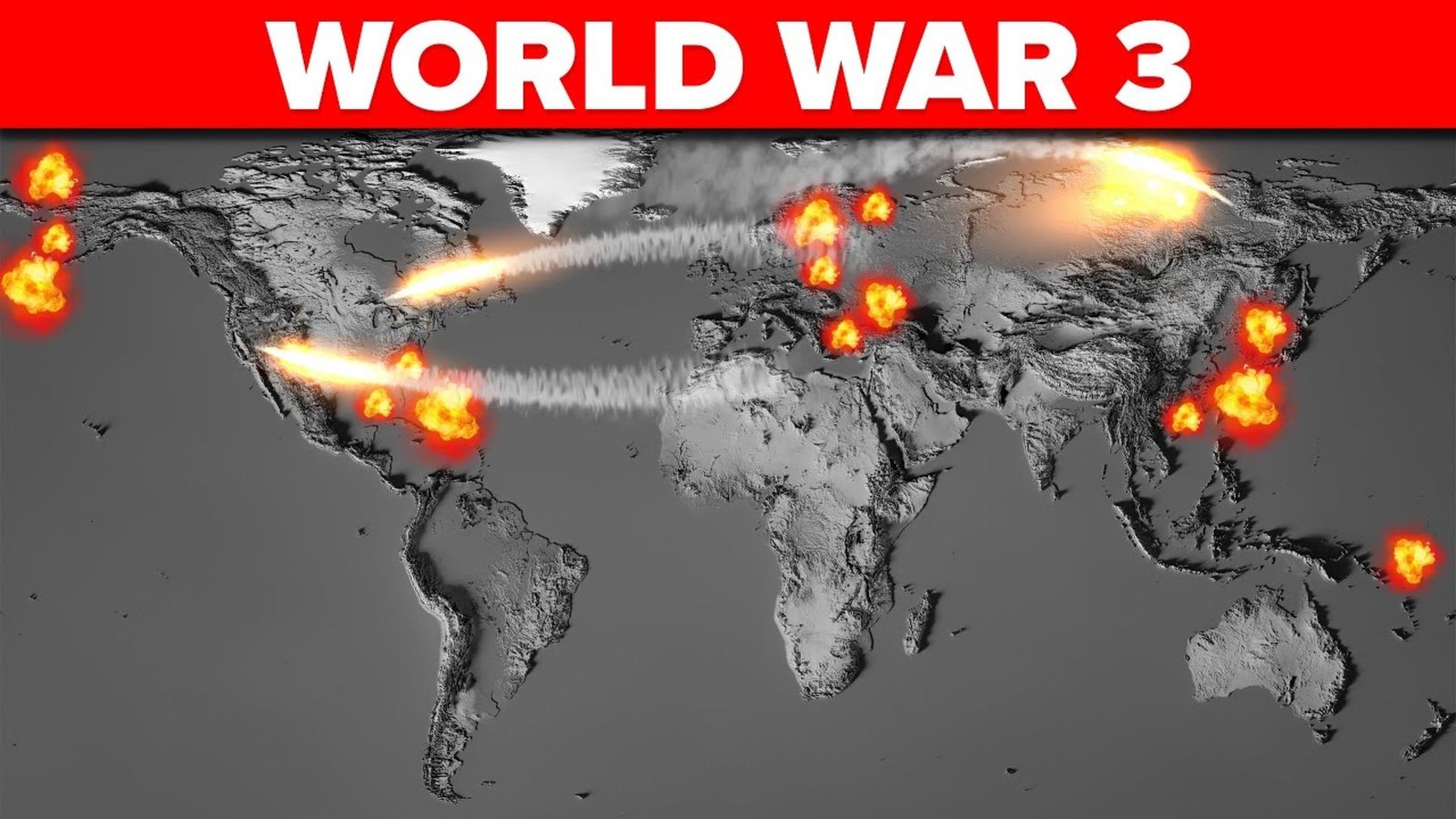
When people search for world war 3 news, they are usually trying to answer a simple but frightening question: Has the world moved closer to a global war? Headlines about Russia and NATO, China and Taiwan, Iran, nuclear weapons, cyberattacks, and military deployments can make separate conflicts appear like pieces of one enormous confrontation.
As of October 2, 2026, there is no officially recognized global war involving the world’s major military powers. However, several conflicts and rivalries are creating genuine escalation risks. The situation is especially sensitive because some of the countries involved possess nuclear weapons, while modern warfare increasingly combines conventional weapons with cyber operations, drones, space systems, economic pressure, and information warfare.
This article explains what the latest developments actually show, why experts worry about escalation, which flashpoints matter most, and how to distinguish a serious warning from sensational world war 3 news.
Is World War 3 happening right now?
No. The phrase “World War 3” describes a potential large-scale conflict involving multiple major powers and alliances. It is not the formal name of a current war.
That distinction matters because the world can experience several serious regional conflicts without those conflicts automatically becoming a world war.
At present, major security concerns include:
- Russia’s continuing war against Ukraine and tensions with NATO.
- Rising military and strategic competition involving China, Taiwan and the United States.
- The continuing instability surrounding Iran and the wider Middle East.
- Increasing reliance on nuclear weapons and modernization of nuclear arsenals.
- Cyber, space, drone and information operations that can complicate traditional military boundaries.
The United Nations warned in September that the Ukraine war was entering a dangerous phase, with increasing civilian casualties and growing concerns about regional spillover.
That is serious, but it is different from saying a third world war has begun.
Why are World War 3 fears increasing?
One reason is that today’s conflicts are connected through alliances, weapons supplies, trade, technology and geography.
Russia, Ukraine and NATO
The Russia-Ukraine war remains one of the clearest pathways through which a regional conflict could create a wider confrontation.
NATO describes Russia’s war against Ukraine as the gravest threat to Euro-Atlantic security in decades and has strengthened its eastern defenses. NATO also says hostile activities affecting its members and partners include airspace violations, cyberattacks and sabotage.
The situation became particularly sensitive around the Baltic region in late September 2026.
Russia warned NATO that it could use its full arsenal, including nuclear weapons, if Kaliningrad or other Russian territory were threatened. NATO Secretary General Mark Rutte publicly rejected the nuclear threat and emphasized the alliance’s defensive position.
The important point is that a nuclear warning is not the same thing as a nuclear attack. Governments frequently use deterrent language to communicate red lines. The danger arises when military activity, political pressure and misunderstandings begin reinforcing one another.
China, Taiwan and the United States
Taiwan is another major flashpoint because it involves competing territorial claims, Chinese military power, Taiwan’s self-defense preparations and U.S. security commitments.
Recent reporting indicates that U.S. officials currently consider a Chinese invasion of Taiwan before 2028 unlikely, despite China’s stated goal of having the capability to act by 2027. That assessment should not be confused with a guarantee that military conflict cannot occur.
On October 2, Taiwan received the first two of 66 F-16V Block 70 fighter jets from the United States, part of a major modernization effort intended to strengthen Taiwan’s defenses.
This illustrates an important feature of modern deterrence: military preparation can be intended to prevent war while simultaneously making an already tense relationship appear more militarized.
Iran and the Middle East
The Middle East is another source of international risk. Current fighting involving Iran has broader implications because of energy markets, shipping routes, regional armed groups and the involvement of outside powers.
The World Economic Forum’s September 2026 geopolitical review described the U.S.-Iran conflict as deepening into an energy, fiscal and political crisis.
For ordinary people, this matters beyond the battlefield. A serious escalation around major oil-producing countries or strategic shipping routes can affect fuel prices, transportation, inflation and global supply chains even when fighting remains geographically contained.
The nuclear issue changes everything
The most important difference between today’s geopolitical environment and many earlier periods of international conflict is the presence of large nuclear arsenals.
SIPRI estimated that the world had about 12,187 nuclear warheads in January 2026, with roughly 2,100–2,200 deployed warheads maintained at high operational alert. It also reported that all nine nuclear-armed states continued modernization programs.
That does not mean nuclear war is inevitable.
Nuclear deterrence is based partly on the idea that launching a nuclear attack could produce catastrophic retaliation. But deterrence depends on leaders making accurate decisions under extreme pressure.
That creates a less obvious danger: miscalculation.
A country may interpret a military exercise as preparation for an attack. A radar system may misclassify an object. A cyberattack may disrupt communications. Political leaders may receive incomplete information during a rapidly developing crisis.
SIPRI’s 2026 research specifically warns that modern warfare increasingly combines nuclear and non-nuclear capabilities across land, sea, air, cyber and space, creating new pathways for escalation.
A less obvious risk: cyber and space warfare
Traditional discussions about a world war often focus on tanks, aircraft and missiles.
Modern conflict is more complicated.
Military forces now depend heavily on:
- Satellites
- GPS and navigation systems
- Internet infrastructure
- Communications networks
- Financial systems
- Cloud computing
- Artificial intelligence
- Undersea cables
- Electrical grids
An attack against one of these systems could create military consequences without a traditional declaration of war.
For example, disrupting satellite communications could affect military coordination. Disabling financial infrastructure could create economic disruption. A cyberattack on energy infrastructure could affect civilians far from the battlefield.
This is one of the less commonly discussed aspects of world war 3 news: the opening stage of a major confrontation might not initially look like a conventional war at all.
What could actually trigger a wider war?
There is no single guaranteed trigger, but several scenarios could create severe escalation.
1. Direct Russia-NATO military confrontation
An incident involving aircraft, missiles, drones or military forces could become dangerous if casualties occur on NATO territory or if either side interprets an incident as deliberate.
The closer military forces operate to one another, the greater the importance of communication and crisis-management mechanisms.
2. A major Taiwan Strait crisis
A blockade, invasion attempt or serious military confrontation involving China, Taiwan and the United States could potentially draw in additional regional powers.
A conflict in the Taiwan Strait would also have consequences for semiconductor production, shipping and global trade.
3. Nuclear escalation
A conventional conflict involving nuclear-armed states becomes particularly dangerous if one side believes its strategic forces are threatened.
SIPRI has warned that weakening arms-control arrangements and growing reliance on nuclear weapons are increasing the potential for miscalculation and escalation.
4. A chain reaction across several regional conflicts
Another possibility is not one dramatic event, but several crises happening simultaneously.
A conflict in Europe, a crisis in East Asia and a Middle Eastern war could compete for military resources and diplomatic attention. The danger would come from the interaction between these crises rather than from any one conflict alone.
How to read World War 3 news without getting misled
The internet makes geopolitical news difficult to interpret because dramatic headlines often spread faster than verified information.
Before believing a claim, ask:
- What actually happened?
Separate an official statement from an attack, deployment or confirmed military incident. - Who is making the claim?
Governments, militaries and political leaders have strategic reasons for how they describe events. - Is the report independently confirmed?
A single social-media post is not equivalent to multiple reliable reports. - Is the headline predicting something or reporting something?
“World War 3 could happen” is fundamentally different from “two countries exchanged fire.” - What is the date?
Old footage and recycled claims frequently reappear during new crises.
This is especially important with military videos. Footage from an earlier conflict can be presented as evidence of a new attack, while AI-generated or digitally altered material can make verification even harder.
Three insights that are easy to miss
Modern escalation may happen below the threshold of war
Countries do not necessarily have to launch a conventional invasion to damage one another. Cyberattacks, sabotage, economic restrictions, drone incidents and information operations can create pressure while governments attempt to avoid direct military confrontation.
NATO has specifically identified cyberattacks, sabotage and airspace violations as part of the current security environment on its eastern flank.
Nuclear danger is not only about nuclear missiles
Attacks on nuclear facilities can create dangerous consequences even without a nuclear weapon being fired.
The UN has highlighted concerns over strikes affecting nuclear infrastructure in both Iran and Ukraine.
This means nuclear risk also includes the possibility of accidents, radioactive releases or misinterpretation during conventional fighting.
The first sign of a wider crisis may be economic
A major geopolitical confrontation could affect oil, shipping, insurance, semiconductor supplies, currencies and food prices before ordinary people see conventional military action directly.
That is why monitoring markets and supply chains can sometimes provide a different perspective from watching military headlines alone.
What should people watch next?
If you want to follow world war 3 news responsibly, focus on developments that indicate a meaningful change in the strategic situation rather than every dramatic headline.
Watch for:
- Direct military clashes between nuclear-armed states.
- Major changes in nuclear alert levels.
- Formal changes to alliance commitments.
- Large-scale mobilization of military forces.
- Attacks on critical infrastructure belonging to another major power.
- Closure of important international shipping routes.
- Breakdown of diplomatic communication.
- Confirmed attacks on nuclear facilities.
- Emergency meetings involving major governments or international organizations.
A single threatening statement can be important, but several of these developments occurring together would provide much stronger evidence of a deteriorating international security environment.
Frequently Asked Questions
Is World War 3 happening now?
There is no officially recognized World War 3 involving the major global powers as of October 2, 2026. However, several serious conflicts and rivalries are creating genuine risks of escalation, particularly around Ukraine, NATO, Taiwan and the Middle East. The distinction between an existing regional war and a global war is important.
What countries could be involved in World War 3?
Any hypothetical world war would depend on how a crisis developed, so there is no reliable list of countries that would necessarily participate. Major military powers including the United States, Russia and China are central to many current strategic flashpoints, while NATO members and countries in Europe and Asia could become involved depending on the circumstances.
Is Russia going to start World War 3?
Current developments do not establish that Russia is planning to start a world war. Russia has issued serious warnings toward NATO, including recent nuclear-related warnings concerning Kaliningrad, while NATO has continued strengthening its eastern defenses and supporting Ukraine. These developments demonstrate heightened tension, not proof of an inevitable global war.
Could China invade Taiwan and cause World War 3?
A conflict over Taiwan could create a major international crisis because of China’s military power, Taiwan’s defenses and U.S. involvement in the region. However, current U.S. officials reportedly assess a Chinese invasion before 2028 as unlikely, while emphasizing that China’s military preparations remain significant.
How likely is nuclear war?
No responsible source can provide a precise probability for nuclear war. The risk is influenced by military confrontations, nuclear doctrines, command systems, political decisions and the possibility of human or technical error. SIPRI’s 2026 assessment says nuclear risks are rising amid modernization, weaker arms-control arrangements and greater geopolitical tension.
Conclusion
The most useful way to understand world war 3 news is to separate real geopolitical developments from predictions about what might happen next.
The current international environment is undeniably tense. Russia’s war against Ukraine continues to create risks involving NATO, China-Taiwan tensions remain strategically important, the Middle East is unstable, and nuclear arsenals are being modernized. International organizations and security researchers have also highlighted new risks created by cyber, space, artificial intelligence and other technologies.
But heightened risk is not the same as a confirmed world war.
For readers following events, the best approach is to look for verified changes in military posture, direct clashes, nuclear activity, alliance commitments and diplomatic communication rather than relying on sensational predictions. That distinction makes it easier to understand what is genuinely happening—and what remains hypothetical.
