

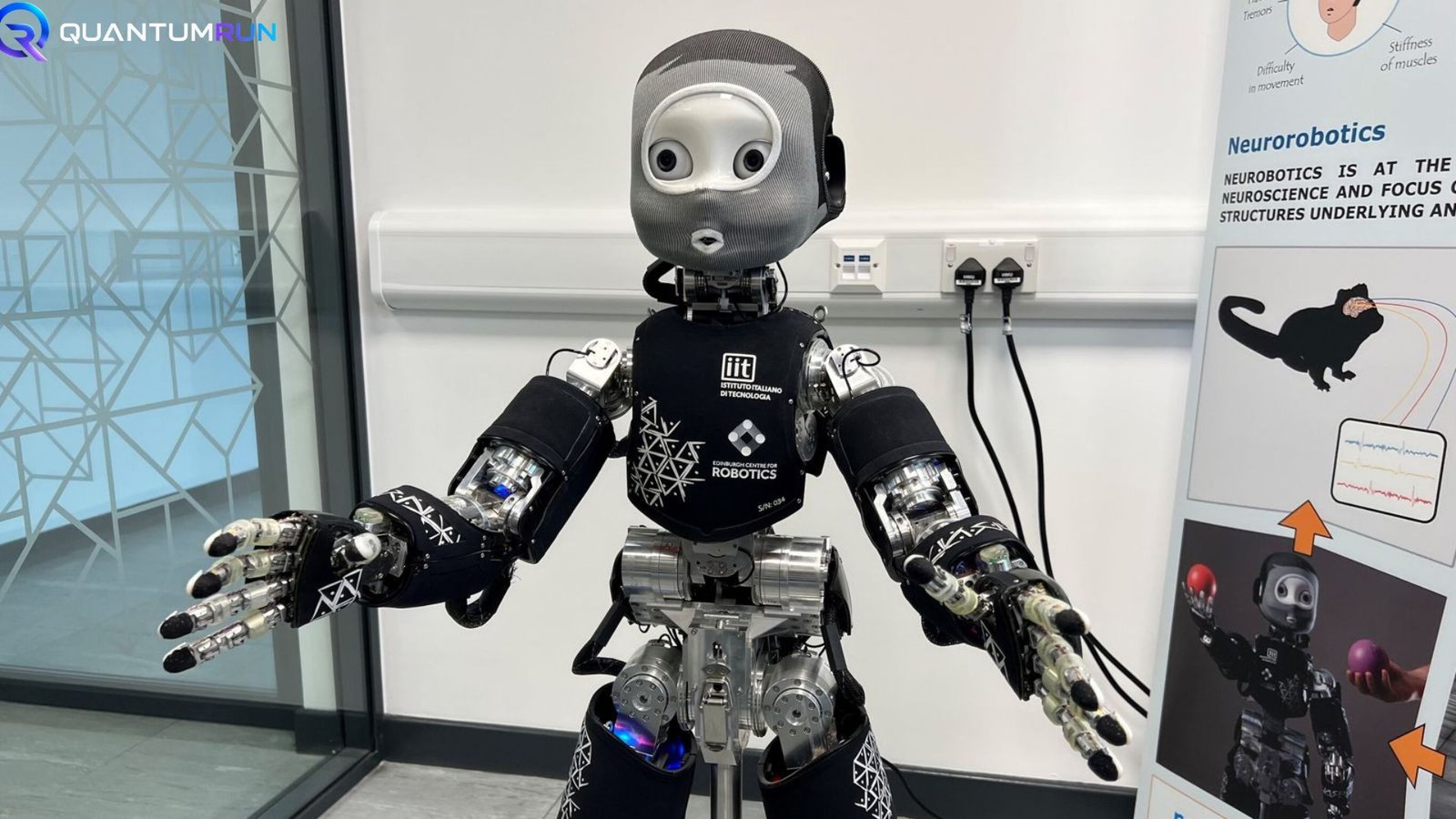
Robots are moving beyond tightly controlled production lines into warehouses, laboratories, logistics networks and increasingly complex workplaces. The most important robotics news in 2026 is therefore not simply about machines becoming more impressive. It is about whether robots can perform useful work reliably, economically and safely.
For readers in the US and UK, several developments deserve particular attention: stronger industrial robot adoption, rapid progress in artificial intelligence, growing interest in humanoid machines and new efforts to establish practical safety rules for robots working alongside people.
Robotics News Is Shifting From Demonstrations to Deployment
Robotics remains a fast-growing part of industrial automation. International Federation of Robotics (IFR) figures show that 542,000 industrial robots were installed worldwide during 2024, while the global operational stock reached about 4.66 million units. Asia accounted for 74% of new installations.
Those numbers help explain a major change in robotics news. Attention-grabbing humanoid demonstrations still generate headlines, but much of the measurable economic impact is coming from less theatrical machines performing specialised jobs.
Manufacturers use robots for welding, assembly, material handling and machine tending. Warehouses rely on autonomous mobile robots to transport goods, while increasingly sophisticated perception systems allow machines to operate in environments that change throughout the day.
| Robotics Area | Current Practical Role | Key Challenge |
|---|---|---|
| Industrial robots | Manufacturing, welding, assembly | Integration cost and flexibility |
| Cobots | Human-robot collaborative tasks | Workplace safety and risk assessment |
| Autonomous mobile robots | Warehousing and logistics | Navigation in dynamic environments |
| Humanoid robots | Pilot factory and service applications | Reliability, battery life and dexterity |
| AI-enabled robots | Adaptive perception and decision-making | Trustworthy operation and quality data |
The distinction matters. A successful robot does not have to resemble a person. For many commercial tasks, a purpose-built machine remains faster, cheaper and easier to maintain.
US Robot Adoption Returns to Growth
The United States remains one of the world’s largest industrial robotics markets. Preliminary IFR figures released in June 2026 showed US industrial robot installations rising 11% year over year to approximately 38,000 units in 2025. The automotive industry remained the country’s biggest adopter, with about 13,500 installations.
The broader robotics news story, however, is the expansion of automation beyond automotive manufacturing. Food production and other non-manufacturing sectors contributed to the US recovery, indicating that robotics investment is reaching industries that historically depended more heavily on manual processes.
Artificial intelligence is accelerating that transition. Traditional automation performs predefined sequences extremely well, but AI-based perception can help robots identify objects, interpret changing environments and make limited operational decisions.
A July 2026 roadmap from the US National Institute of Standards and Technology highlighted robotics, autonomous systems, digital twins, advanced sensing and industrial AI among important areas in smart manufacturing. It also identified reliability, data management and trustworthy operation as continuing challenges.
💡 Pro Tip
Businesses evaluating robotics should begin with the process rather than the robot. Identify repetitive, dangerous or consistently measurable tasks first, then compare automation technologies against required throughput, safety conditions, integration complexity and total operating cost. A technically impressive robot is a poor investment if the underlying workflow does not justify automation.
The UK Is Focusing on Smart Machines and Safe Cobots
British robotics policy increasingly treats intelligent machines as an economic and industrial capability rather than a narrow manufacturing technology.
The UK’s Smart Machines Strategy 2035, published through the Department for Science, Innovation and Technology in February 2025, outlines a long-term vision for intelligent and semi-autonomous systems across sectors including infrastructure, environmental protection, healthcare and defence.
Safety is also receiving greater attention.
In June 2026, Britain’s Health and Safety Executive announced work with the Regulatory Innovation Office, Automate UK and the Manufacturing Technology Centre to produce joint industry guidance for collaborative robotics. The project is intended to give businesses clearer information about safely deploying cobots alongside workers.
This is an important robotics news development because collaborative machines create different risk profiles from traditional industrial robots enclosed behind physical barriers. Safe deployment can involve speed restrictions, separation monitoring, emergency-stop systems, workspace design and task-specific risk assessments.
Humanoid Robots Still Face a Reality Test
Humanoid robots have become the most visible part of robotics, helped by advances in generative AI, computer vision, actuators and machine-learning models.
Their potential is straightforward: workplaces and homes were designed for humans, so a machine with human-like mobility and manipulation could theoretically operate existing doors, tools, shelves and workstations without requiring every environment to be redesigned.
Commercial usefulness remains harder.
Humanoids must balance several demanding requirements at once: stable movement, precise manipulation, adequate battery life, reliable perception and safe interaction with people. Real-world environments also contain unexpected objects and situations that are far more difficult than controlled demonstrations.
Recent robotics news has therefore produced a useful distinction between physical capability and machine intelligence. Better motors and mechanical systems can make a robot walk or lift objects, but useful autonomy depends on the ability to interpret situations correctly and recover from errors.
That is why “physical AI” has become a major industry concept: combining artificial intelligence with machines capable of sensing and acting in the physical world.
What Businesses and Consumers Should Watch
The most meaningful progress during the next phase of robotics will probably be measured through deployment rather than spectacle.
Watch for robots completing longer shifts with fewer human interventions, manufacturers documenting measurable productivity improvements, better interoperability between robotics platforms and stronger safety standards for systems that share spaces with workers.
Cost will be equally important. Even highly capable machines must compete against conventional automation and existing labour processes. Businesses will consider acquisition costs alongside maintenance, energy use, software subscriptions, integration work, downtime and employee training.
📌 Key Takeaway
The strongest robotics news is increasingly about practical adoption. AI is improving robot perception and autonomy, but reliability, safety, integration and economics remain decisive. Industrial robots and specialised autonomous machines are already delivering measurable value while humanoids continue moving through pilot and early-commercial stages.
Frequently Asked Questions
What is the biggest robotics trend in 2026?
The integration of AI with physical machines is one of the most significant trends. Robots are gaining more sophisticated perception, planning and adaptive capabilities, allowing them to handle tasks that are difficult to automate through fixed programming alone. Industrial deployment remains more mature than general-purpose humanoid robotics.
Are humanoid robots already being used commercially?
Some companies are testing humanoid robots in industrial and logistics environments, but widespread general-purpose deployment remains limited. Reliability, manipulation accuracy, battery endurance, safety and cost must improve before humanoids can compete consistently with specialised automation for many everyday commercial tasks.
Is robotics growing in the United States?
Yes. Preliminary IFR data showed US industrial robot installations increasing by 11% to around 38,000 units in 2025. Automotive manufacturing remained the leading application, while growth in food and other sectors showed that automation demand is becoming more diverse.
How is the UK supporting robotics development?
The UK has outlined long-term ambitions through its Smart Machines Strategy 2035 while also working on regulatory guidance for collaborative robots. These initiatives address both innovation and practical deployment, including how businesses can introduce intelligent machines while maintaining appropriate workplace safety standards.
Will robots replace human workers?
Robotics can eliminate or reduce certain repetitive, hazardous and predictable tasks, but workplace effects depend heavily on the industry and application. Many deployments change job responsibilities rather than removing every human role, creating greater demand for integration, maintenance, supervision, programming and process-management skills.
What Comes Next for Robotics
The next major advances may attract fewer viral videos but have greater economic significance. Robots that work reliably for longer periods, require less specialist programming and adapt safely to changing environments could expand automation across manufacturing, logistics and services.
For US and UK readers following robotics news, the most useful indicators will be commercial deployments, safety developments, measurable productivity gains and improvements in AI-powered autonomy. The machines attracting the biggest headlines are not necessarily the ones changing industry fastest.
The Future of Robotics
Robotics is shifting from impressive demonstrations to practical, real-world deployment. AI, automation and better hardware are making robots more capable, but cost, safety and reliability still determine their commercial value.
For anyone following robotics news, the key developments will be those that show measurable results in factories, warehouses and workplaces. The future of robotics will depend less on hype and more on machines that can work safely, consistently and economically.
