

Football fans have plenty to look forward to as the World Cup 2026 brings the world’s biggest international football tournament to North America. With an expanded field of 48 national teams, matches across three host countries, and a new route through the knockout rounds, following the competition requires more than checking the final score. This guide explains the tournament format, schedule, groups, standings, tickets, qualification process, and key questions fans want answered.
What Is the FIFA World Cup 2026?
The FIFA World Cup 2026 is the men’s international football championship organized by FIFA. Canada, Mexico, and the United States are jointly hosting the tournament, making it the first men’s World Cup staged across three countries.
The competition features 48 national teams, up from the 32-team format used from 1998 through 2022. The expanded tournament includes a group stage followed by knockout matches, giving more countries an opportunity to compete on football’s biggest stage.
Key Facts About the Tournament
| Tournament detail | Information |
|---|---|
| Official competition | FIFA World Cup 2026 |
| Host countries | Canada, Mexico, United States |
| Number of teams | 48 |
| Total matches | 104 |
| Opening date | June 11, 2026 |
| Final date | July 19, 2026 |
| Group-stage format | 12 groups of four teams |
| Teams advancing | Top two in each group and eight best third-placed teams |
| Knockout rounds | Round of 32, Round of 16, quarter-finals, semi-finals, final |
| Organizing body | FIFA |
These details describe the planned tournament format. Match results, standings, and qualification outcomes must be checked against the actual competition results rather than inferred from the original schedule.
World Cup 2026 Schedule: Important Dates and Results
The world cup 2026 schedule ran from June 11 to July 19, 2026. The tournament has now concluded, so fans looking for fixtures should also check completed scores rather than relying on pre-tournament predictions. FIFA’s published match schedule records all 104 matches, including the knockout rounds and final.
Tournament Schedule at a Glance
| Stage | Dates in 2026 | What happened |
|---|---|---|
| Opening match | June 11 | Mexico opened the tournament against South Africa |
| Group stage | June 11–27 | All 48 teams competed in groups |
| Round of 32 | June 28–July 3 | 32 teams competed in the first knockout round |
| Round of 16 | July 4–7 | 16 teams competed for quarter-final places |
| Quarter-finals | July 9–11 | Eight teams competed for semi-final spots |
| Semi-finals | July 14–15 | Four teams competed for a place in the final |
| Bronze final | July 18 | England defeated France 6–4 |
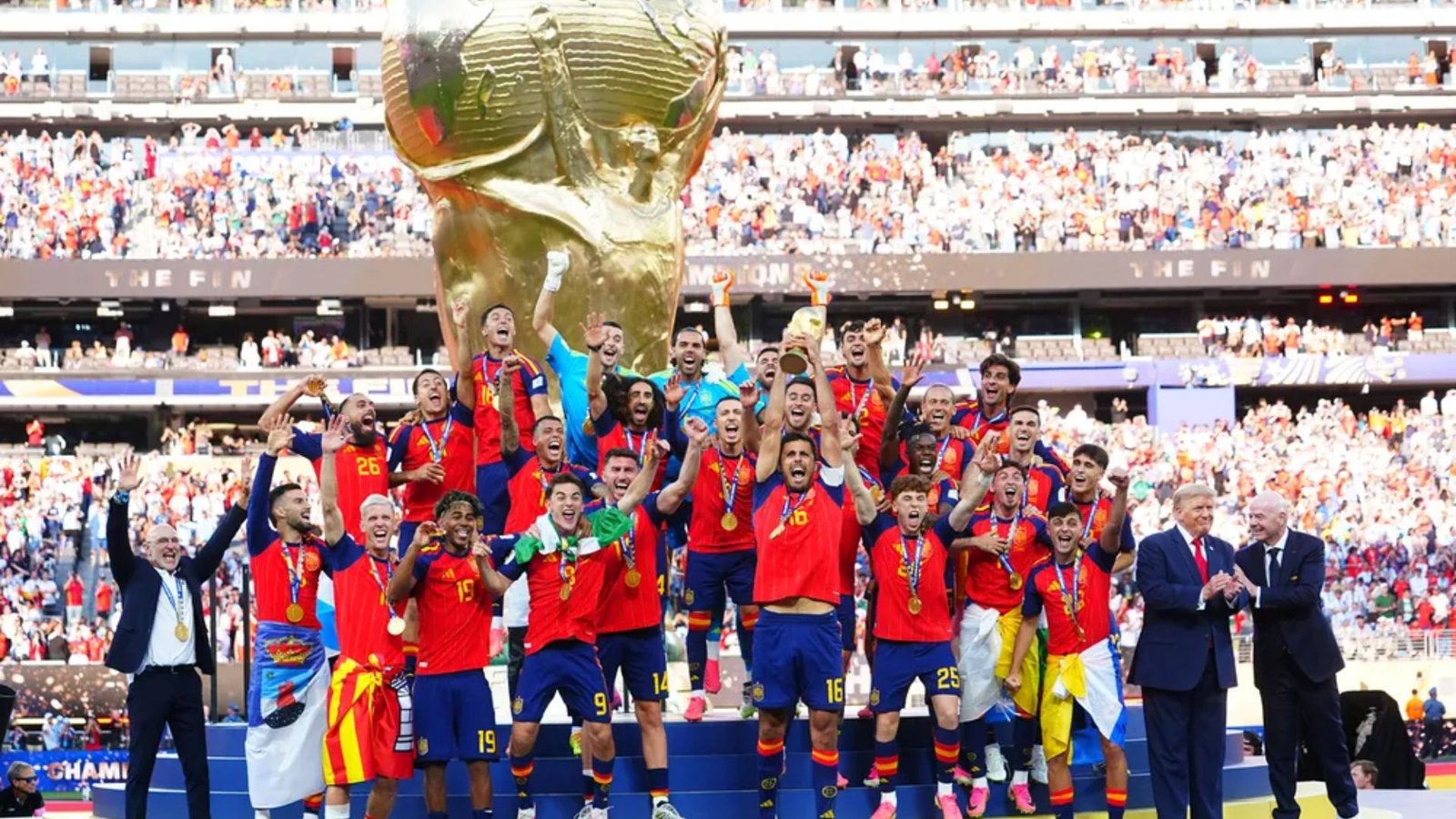
| World Cup final | July 19 | Spain defeated Argentina 1–0 after extra time |
The final took place at New York New Jersey Stadium. Spain’s victory earned the country its second men’s World Cup title, following its 2010 triumph.
How to Read the Match Schedule
When reviewing a fixture list, pay attention to three details:
- Kick-off time: Check the time zone, especially when watching from another country.
- Venue: The same tournament includes stadiums across three countries.
- Match status: Distinguish scheduled fixtures from completed matches and final scores.
For fans following from Pakistan, converting the listed kick-off time to Pakistan Standard Time (PKT) helps avoid missing matches. A match listed in Eastern Time may fall on a different calendar date in Pakistan.
World Cup 2026 Groups: How the 48 Teams Were Divided
The FIFA tournament used 12 groups, labeled A through L, with four teams in each group. Every team played three group-stage matches, creating opportunities to earn points and improve its goal difference.
Group-Stage Points System
Teams earned points under the standard football group-stage system:
| Match result | Points earned |
|---|---|
| Win | 3 |
| Draw | 1 |
| Loss | 0 |
Teams were ranked using FIFA’s applicable competition rules. Points are important, but goal difference, goals scored, and other tie-breakers can determine which teams advance when records are level.
Who Advanced From the Groups?
The top two teams in each group advanced automatically. FIFA also selected the eight best third-placed teams, completing the 32-team knockout lineup.
This format made the final group matches particularly important. A team could finish third and still progress, but its results had to compare favorably with those of third-placed teams in other groups.
FIFA World Cup 2026 Standings: What Do They Show?
The fifa world cup 2026 standings recorded each team’s performance in the group stage and, after the tournament, its final position. Group tables typically display matches played, wins, draws, losses, goals scored, goals conceded, goal difference, and points.
Understanding a Standings Table
| Column | Meaning |
|---|---|
| MP | Matches played |
| W | Matches won |
| D | Matches drawn |
| L | Matches lost |
| GF | Goals scored |
| GA | Goals conceded |
| GD | Goal difference: goals scored minus goals conceded |
| Pts | Total points earned |
For example, a team with two wins and one draw earns seven points. If two teams finish level on points, goal difference and other competition tie-breakers help establish their order.
After the final whistle of the tournament, the final standings also rank teams according to their overall results and the rules used to separate teams eliminated at the same stage. Spain finished first, Argentina second, and England third.
FIFA World Cup 2026 Bracket: How the Knockout Rounds Worked
The fifa world cup 2026 bracket began with 32 teams after the group stage. Unlike the previous 32-team tournament format, the expanded competition included a Round of 32 before the Round of 16.
The knockout structure was:
- Round of 32 — 32 teams
- Round of 16 — 16 teams
- Quarter-finals — 8 teams
- Semi-finals — 4 teams
- Bronze final — two teams that lost their semi-finals
- Final — two teams competing for the championship
Knockout matches require a winner. If a match is level after normal time, extra time and, if necessary, a penalty shootout determine which team advances.
Why the Round of 32 Mattered
The round of 32 world cup 2026 was a new stage compared with the familiar knockout format used from 1998 through 2022. It gave more teams a chance to reach the knockout rounds but also required finalists to play more matches than in earlier editions.
Spain’s route to the trophy included victories over Portugal, Belgium, France, and Argentina in the knockout stages. The final ended 1–0 after extra time, completing Spain’s championship run.
Who Won the World Cup 2026?
Spain won the FIFA World Cup 2026, defeating Argentina 1–0 after extra time in the final on July 19, 2026. The victory gave Spain its second men’s World Cup championship, adding to the title it won in 2010.
World Cup 2026 Final Result and Tournament Highlights
| Achievement | Team or player |
|---|---|
| World champions | Spain |
| Runners-up | Argentina |
| Third place | England |
| Final score | Spain 1–0 Argentina |
| Deciding period | Extra time |
| Spain’s previous men’s World Cup title | 2010 |
The final was the last of 104 matches in a tournament that brought together 48 national teams. Spain finished the competition as champions after a successful knockout run.
Is Messi Playing in the World Cup 2026?
Yes. Lionel Messi played for Argentina in the 2026 tournament, and Argentina reached the final against Spain. The team ultimately finished as runners-up after losing 1–0 after extra time.
Messi’s participation was a major talking point because fans had questioned whether he would compete in another World Cup at this stage of his career. His appearance in the tournament allowed supporters to follow his performances in what became another memorable chapter of his international career.
When reviewing player statistics, distinguish between tournament appearances, starts, goals, assists, and minutes played. These measures describe different aspects of a player’s contribution.
FIFA World Cup 2026 Qualifiers and Qualification Table
The fifa world cup 2026 qualifiers determined which national teams earned places in the final tournament. FIFA’s six continental confederations organized qualification competitions, with each region using its own schedule and qualification rules.
The main confederations were:
- AFC: Asian Football Confederation
- CAF: Confederation of African Football
- Concacaf: North and Central America and the Caribbean
- CONMEBOL: South American Football Confederation
- OFC: Oceania Football Confederation
- UEFA: Union of European Football Associations
The three host countries—Canada, Mexico, and the United States—qualified automatically as hosts.
How to Understand a Qualifiers Table
A fifa world cup 2026 qualifiers table usually includes a team’s matches played, wins, draws, losses, goals scored, goals conceded, goal difference, and points.
| Metric | Why it matters |
|---|---|
| Points | Shows the team’s accumulated results |
| Goal difference | Helps separate teams on equal points |
| Goals scored | Can be used as a tie-breaker |
| Matches remaining | Shows how many opportunities remain during qualifying |
| Qualification position | Indicates whether a team is on course to advance under the relevant rules |
Because qualifying formats differ between confederations, there is no single table that accurately represents every national team’s progress. For historical research, use the final table for the relevant region rather than a pre-tournament prediction.
World Cup 2026 Tickets: Can You Still Buy Them?
The tournament ended on July 19, 2026, so regular match tickets for this edition are no longer available for upcoming fixtures. Fans researching world cup 2026 tickets may still encounter resale listings, hospitality information, or pages preserved for reference.
Before considering any secondary-market listing, check its authenticity and the seller’s terms. Be especially cautious of sellers who demand payment through unusual methods or promise guaranteed entry without providing verifiable ticket details.
For future international tournaments, fans should plan around:
- Official ticket-sale announcements
- Registration and ticket application windows
- Venue and match availability
- Ticket category and seating restrictions
- Travel, accommodation, and local transportation costs
Buying early does not always guarantee a ticket, and unofficial listings may carry additional risks.
Panini World Cup 2026 Album: What Collectors Should Know
The panini world cup 2026 album attracted interest from football fans and sticker collectors looking to document the expanded tournament. World Cup sticker albums typically organize player stickers, national teams, and tournament-related collectibles into a structured collection.
Collectors should check the specific edition before buying because product availability and album contents may differ by country.
Useful details to verify include:
- Whether the album is a standard or special edition
- How many stickers the collection contains
- Which teams and players are featured
- Whether packets and replacement stickers are available
- The condition of second-hand albums
- Whether a listing includes the album alone or additional sticker packets
For collectors, completing an album can be part of the enjoyment of following international football. However, prices for scarce or unopened products may vary, so compare the exact edition and condition before purchasing.
Is the T20 World Cup 2026 the Same Tournament?
No. The T20 World Cup 2026 is a cricket competition, while the FIFA World Cup 2026 is an international football tournament. They use different rules, teams, governing bodies, and competition formats.
| Feature | FIFA World Cup 2026 | T20 World Cup 2026 |
|---|---|---|
| Sport | Football | Cricket |
| Governing body | FIFA | International Cricket Council (ICC) |
| Competition format | 11-a-side football | Twenty20 cricket |
| Main scoring | Goals | Runs and wickets |
| Match structure | Two halves, with extra time where applicable | Limited-overs innings |
| Tournament context | Canada, Mexico, United States | A separate cricket event |
People searching for the T20 World Cup may be looking for cricket fixtures, standings, or results. Make sure the sport is specified when researching schedules or historical statistics to avoid mixing the two competitions.
Frequently Asked Questions
1. Who won the World Cup 2026?
Spain won the FIFA World Cup 2026 by defeating Argentina 1–0 after extra time in the final on July 19, 2026. It was Spain’s second men’s World Cup title.
2. When did the FIFA World Cup 2026 start and end?
The tournament ran from June 11 to July 19, 2026. Mexico hosted the opening match, while the final took place at New York New Jersey Stadium.
3. How many teams played in the World Cup 2026?
Forty-eight national teams competed in the tournament. They were divided into 12 groups of four, followed by a knockout stage beginning with the Round of 32.
4. How did teams qualify for the World Cup 2026 knockout stage?
The top two teams from each of the 12 groups advanced automatically, along with the eight best third-placed teams. This created a 32-team knockout bracket.
5. Did Lionel Messi play in the World Cup 2026?
Yes. Messi played for Argentina, which reached the final before losing to Spain. Argentina finished the tournament in second place.
6. Are World Cup 2026 tickets still available?
The tournament has concluded, so tickets for future matches in this edition are no longer available. Treat resale listings cautiously and verify any ticket’s authenticity before paying.
Conclusion
The FIFA World Cup 2026 delivered a landmark tournament with 48 teams, 104 matches, and games across Canada, Mexico, and the United States. Spain finished as champion after beating Argentina in the final, while England secured third place.
For fans revisiting the competition, the most useful records are the final standings, match results, knockout bracket, and qualification tables. Collectors can also explore tournament memorabilia, while football supporters can use the results to compare teams and players across the competition.
Keep your tournament records organized by date, team, and competition stage. This makes it easier to revisit major matches, understand how the bracket unfolded, and prepare for the next international football championship.
